Thursday, May 31, 2018

2017-2018 Reflections: Our Year in Review

The 2017-2018 school just closed for both of us and we wanted to take a minute to reflect on the year as we were both in new positions within our district.
 
*****
JESS
This year closed out my 10th year of teaching.  My first nine years of teaching I was a 6th-8th grade ELA/Reading Interventionist teacher.  Last May, when we found out our middle school was closing down we all received letters of where we were placed.  I was placed in an elementary school. I was so excited for the new adventure, yet of course scared as well. I wouldn’t know a grade level until July, it was either going to be 1st grade or 3rd grade.

In July, I found out I was going to be a 3rd grade teacher.  I had all these emotions. I was happy, nervous, excited, and kind of wondering what I got myself into.  I started setting up my classroom, I decided upon an Ocean theme (which I never had a “theme” for a classroom before).  I started looking at the curriculum and felt good about it.

The first day came and I instantly fell in love with those little faces that were looking at me and giving me multiple hugs during the day.  My heart was full and I knew at that moment that God placed me where I was supposed to be. I was meant to be an elementary teacher.

As time went on, I realized, holy cow, how much work elementary teaching is.  I had to plan for ELA (Vocabulary, Shared Reading, Independent Work, Guided Reading, Mini Lesson), Writing, Math, Math RTI, Science, Social Studies, Class Meetings, etc.  Talk about feeling overwhelmed! I soon got the hang of it, yet elementary life is HARD.

In December, I had a serious knee surgery (my third) where I had to get cadaver cartilage put in my knee (I was on a donor’s list).  The surgery was more intrusive than expected and I ended up with 40 staples in my knee, internal stitches, and 8 weeks non-weight bearing. I ended up having to take 5 weeks off of school.  I went back for two days and my beloved Grandfather passed away suddenly. During this time, my knee got infected (due to the internal stitches) and I had to get them removed and take an additional week off.  My hashtag for the beginning of the year was “#2018hatesme”. I received an outpouring of messages from my kids and parents making sure I was okay and telling me how much they missed me.

My kids scores for both ELA and Math increased tremendously this year and I couldn't be prouder of my rockstar class. I am excited to get their scores back from our state test.  Especially because Math was the subject I was most scared to teach, yet at the end of the year, when the kids did their reflections, their favorite subject was Math. Life is weird sometimes.

The last few days with my babies were really hard.  I never had to spend everyday with the same group of kids before.  I am going to miss my little rockstar angels, yet I know they will all achieve so much in their life.

Next year, as I reflect on this past year, I will have two new teammates and I am very excited for the new journey with a new team. I have been thinking about what I would like to try and focus on next year and the following are my goals for the 2018-2019 school year:
1. STEM
2. Flexible Seating (#starbucksclassroom)
3. PBL
4. Mindfulness/ Restorative Circle/ Class Meetings

*****
STEPH
Whew! This school year was an absolute whirlwind for me (as I’m sure it was for every other teacher)! The 2017-2018 marked my 8th year in teaching, and I’m happy to say that even with all of the turmoil of the previous school year, this year brought a renewed sense of purpose and inspiration that I needed!  My first seven years of teaching were spent as an 8th grade US History (through Civil War) teacher. This year I moved to a high school in the same district (the same school where I completed my student teaching) and entered a completely different (but awesome) world!

Once I learned I would be teaching both US History (post Civil War) and Government, I started planning in June. To make things more interesting, of course, I wasn’t even starting the year on time! My daughter was born on August 3rd and my students started the year with a guest teacher.  I came back to work with both of my classes already completing their first unit of study and there was definitely an adjustment period for all of us! After a week or two, though, my students and I were in our groove and working well together!

I’ve really enjoyed my transition to high school and definitely believe I am exactly where I should be at this point in my career! Some of my professional highlights from the past year…
1) Collaborating with a whole new team and being able to push some of them out of their comfort zones and towards Google.  Some of my department was already using Google in the classroom, but I’d like to say that I pushed for more engaging ways to use the tech in the classroom and encouraged teachers to try new things!
2) Starting Classcraft in January! OMG! This has been an absolute game changer in my class and I can’t wait to continue using it and gamifying my classroom! After falling in love with this tool, I became a Classcraft Ambassador and just recently completed a completed a webinar for them as well! What can I say? I love Classcraft! (don't worry, we'll be blogging about Classcraft this summer)
3) Finally figuring out Twitter! While I’ve had Twitter for a while, I never really took the time to figure out how it could be a powerful tool in my life.  Now I wonder why I waited so long! Between twitter chats and following specific hashtags, my energy has been restored and I have learned about so many more education trends than I ever would have just waiting for my school and district to provide me with professional development! I’ve always been a fan of PD (seriously, I love it) and twitter has made PD an even more powerful experience this year!
4) Attending Ed Conferences.  Jess and I attended (and facilitated at) 4 EdCamps this year and even presented at a regional conference together! Yay for MOREnet!  
5) Starting this blog has been so exciting! I had been brainstorming blog ideas for months (just ask my husband) but never found a topic/hook/lens through which to write it! I’m so glad Jess and I were willing to take the chance on each other and just go for it!  I’ve really enjoyed the books we’ve read and hope we continue to do more of those (out of selfish interests)!
6) Reaching my goal of Google Certification - Levels 1 & 2.  Next year: Google Certified Trainer!

In the classroom, I felt like I was just trying to stay above water at some points!  Thankfully, I had amazing new co-workers that were willing to share and help in any way they could!

I continued to grow in my use of Google and worked towards moving to the M and R in the SAMR model.  My students loved the days I was able to incorporate Breakouts, simulations and #tlap lessons like the EOC carnival and the Stock Market Game!  Although I wish I had done more, I know that working with a new curriculum, living on little sleep due to a baby and learning the ropes of a new school was pretty important this year!

I have so many ideas in store for next year - student portfolios on Google Sites, students creating Google Maps again, changing the lens through which we study US history and teaching like a pirate #TLAP WAY more often (because hopefully I’ll be sleeping more)!

So, 2018-2019 goals:
1. Become a Google Certified Trainer
2. Flexible Seating
3. PBL/Self-paced (more)
4. Be a great co-teacher (my first time!)
5. Keep blogging and learning!

*****
We hope everyone had a fantastic 2017-2018 school year like we did!  What are your goals for the coming year? Enjoy your break, make time for YOU, and relax a bit.

Tuesday, May 29, 2018

#EduProtocols Chapters 31-36

The sad day has come that we have completed the book “EduProtocol: Field Guide”.  It is okay though, because this book will be a major reference tool for us as we move into next school year.  Below you will find our views on the end of the book! Enjoy!
*****
Jess
Holy cannoli! Tomorrow is our last day of school for the 2017-2018 school year and while reading the ending of this book, well this whole book, it had me thinking of how to implement so many new things into my teaching for next school year.  Now, come on, I need some summer and some time not thinking about school! ;) When a book makes you excited for the next school year and ideas are flooding your brain, and you ARE NOT thinking about the next 2 glorious months of summer, you KNOW it is a good book!


“Their proficiency with technology will grow, as will the students’ ability to read and understand content in a format that more closely mirrors how adults process material in college, career, and everyday life” (page 189).  
When using the protocols in your classroom on a regular basis it will help the students to become better with technology and lead them to think in the ways of the future.  Which, as a teacher, is our goal to have kids career ready when they leave school.


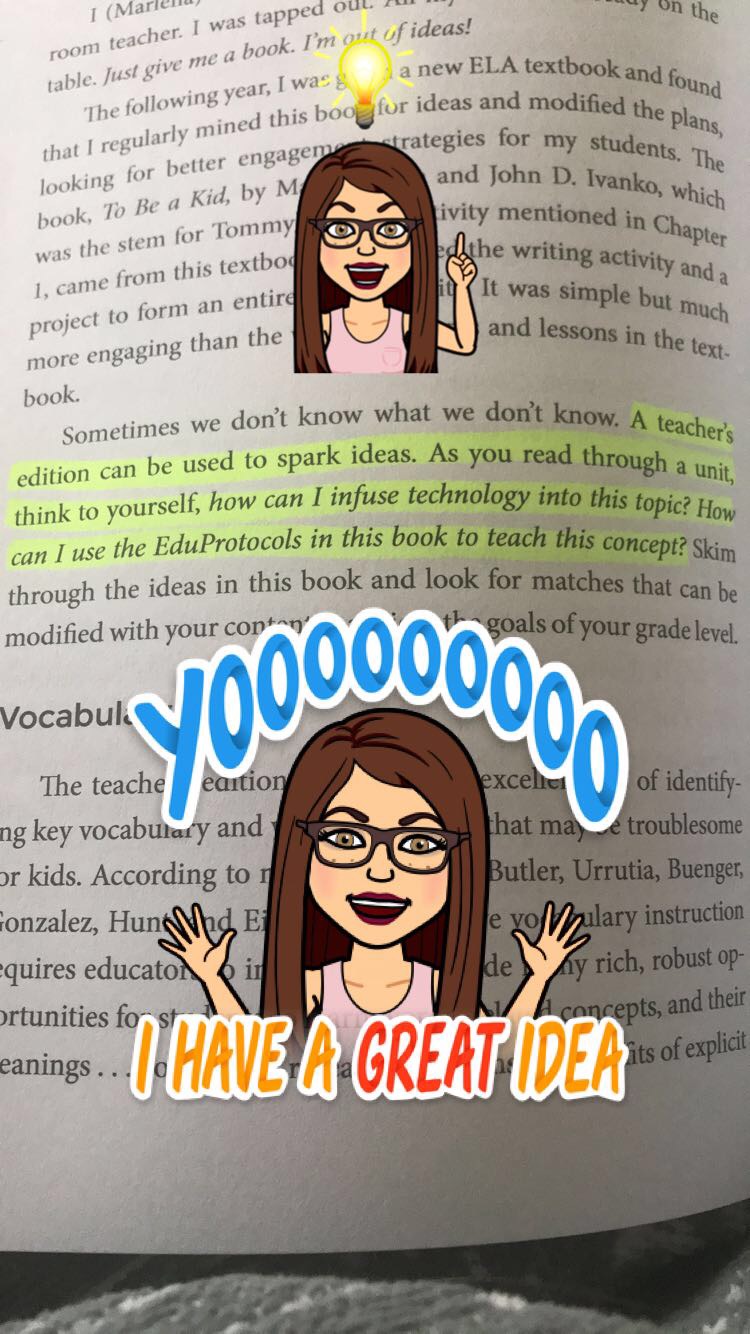
“A teacher’s edition can be used to spark ideas.  As you read through a unit, think to yourself, how can I infuse technology into the topic?  How can I use the EduProtocols in this book to teach this concept?” (page 190).
These are great questions to think about as you are looking at your curriculum or teacher editions to your textbooks.  This really made me think and will also help me guide my lesson planning for next year. Definitely two questions I will keep in mind as I am thinking about creative, fun, lessons for next school year.


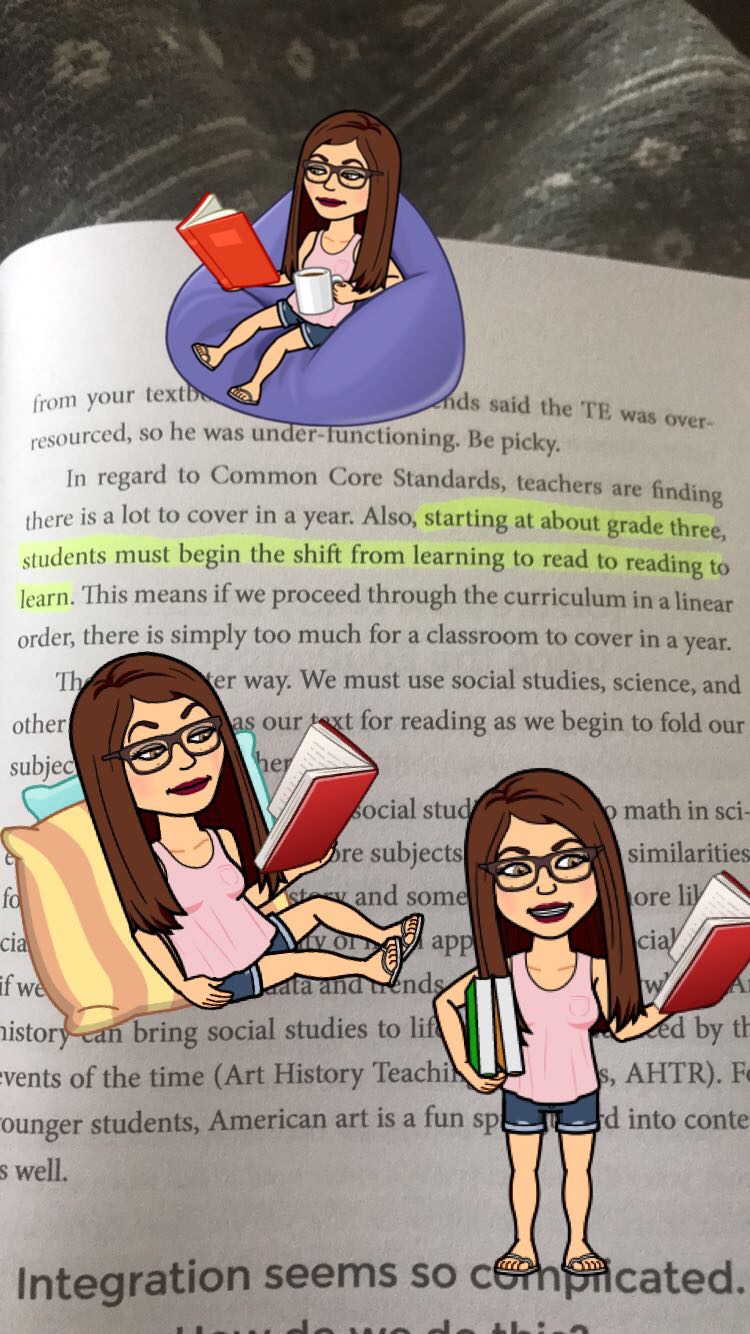
This quote hit home for me as I teach 3rd grade. “Also, starting at about grade three, students must being the shift from learning to read to reading to learn” (page 193).  
This was my first year in 3rd grade and I never thought about that.  Yet, it is SO true. Now, it is my job this next year to help them to read to learn.  The EduProtocol book gives some great examples on how you can achieve this in your classroom.  


Also, at the end of the book they talk about how to use the EduProtocols as assessments. I loved that! This is giving students choice and voice in their work and not giving them the common paper and pencil assessment.  The students create something to show what they know! So cool!
*****
Steph
Like Jess, I cannot believe that this school year has come and gone so quickly!  I will be honest, though, that normal end-of-the-year-teacher-burnout has not happened this year for me. Reading this book in the month of May has really kept me going and really started my brainstorming for the next school year.  This was exactly what I needed as I move myself toward a more student-centered, problem-based classroom and environment!


This year, because of our block scheduling, I realized that my students were plagued by “The Suck” which is explained in Chapter 31.  What is The Suck? Basically that translation in student’s heads when teachers tell them they have plenty of time and they turn it into “I have plenty of time so I don’t need to start right away.”  Yea, you know The Suck!
(page 181)
Jon and Marlena give teachers tips on avoiding this in your classroom and how to structure learning experiences in a way that leads students towards success within the time frame you give - and ensuring it’s an appropriate amount of time! I can see this being the biggest problem is schools with block scheduling - it can be daunting to create a daily class schedule to keep kids engaged, moving but not overwhelmed. EduProtocols can help with this in such a big way!


Even though I already ditched the textbook and TE (teacher edition) in my classroom, I really appreciated that Jon and Marlena took the time to encourage teachers to look at the TE in a new way and incorporate it into the use of EduProtocols. We all have colleagues that lean on the textbook (which isn’t necessarily a bad thing) and could beef up the learning experiences and engagement. Chapter 32 is there for these teachers!  This little gem from Chapter 32 really stuck out to me because it is so true. You know that classic High School Musical mantra… We’re all in this together
!
(page 193)


There are so many things I’m excited to implement in my classroom next year and I cannot wait to continue referencing EduProtocols this summer while I plan!  I will have 2 co-taught classes next year and I’m excited to see how the routine aspect of EduProtocols can really help students succeed at higher rates. The idea becomes that students know the directions, expectations and intended outcomes so they can focus on the content and learning - this can be so powerful for students that may struggle with multi-step directions and other areas of the classroom when routines change! I am also excited to try out some of these protocols for assessments - what a great idea to help students show what they know in a more authentic way! These will look great on their student-created websites!


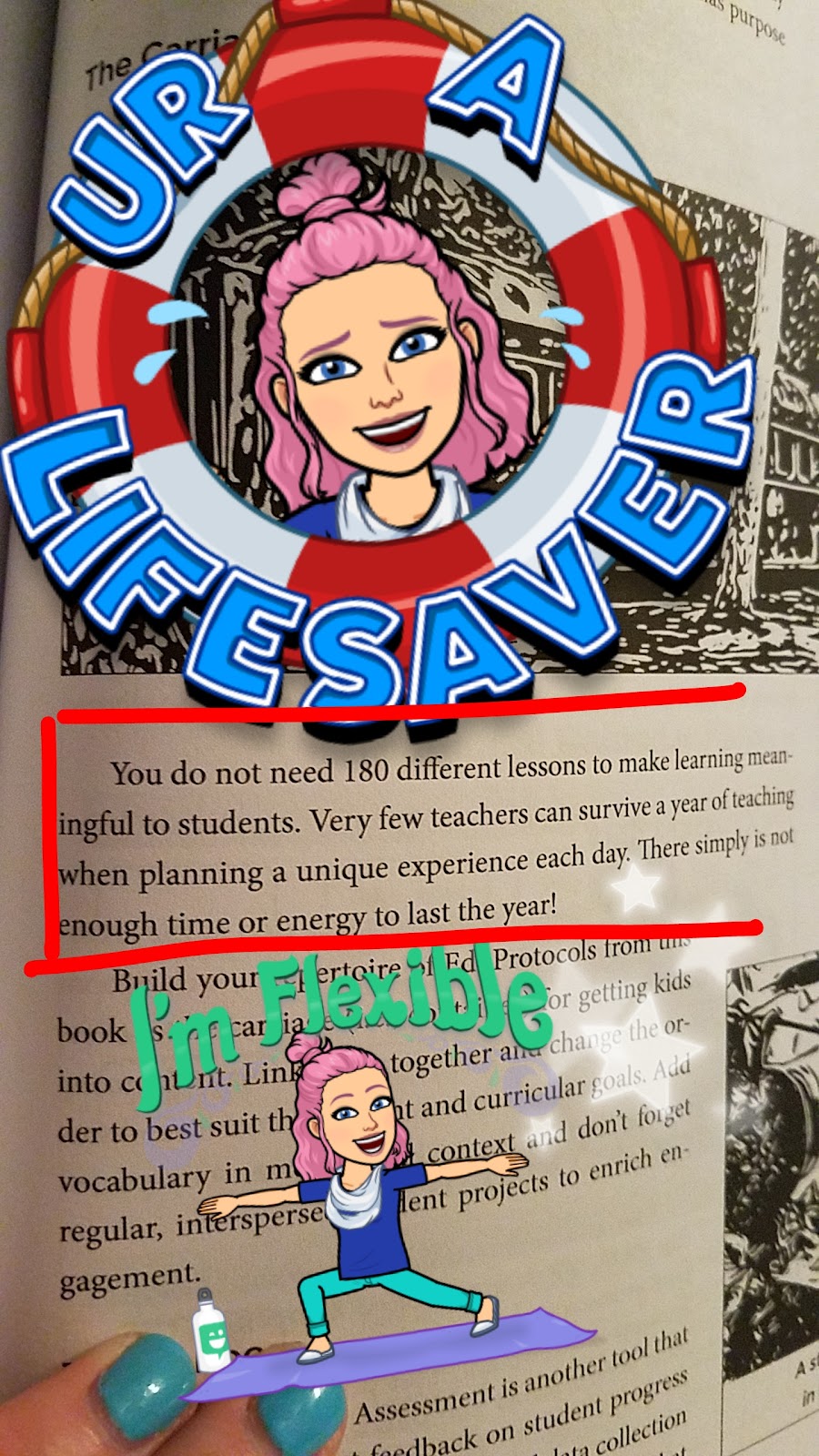
I think this #booksnap helps sum up a lot of the goals of this field guide… EduProtocols are (and will become) a lifesaver, timesaver and sanity saver!
(page 211)
*****

This book is a MUST read and every educator should own this book, highlight it, write in it, and refer back to it a million times when creating exciting learning experiences in their classrooms.  We encourage you to pick this book up -- we did not get to cover ALL of it’s awesomeness in our posts. We are sad the book is over, yet will continue to follow the authors and look forward to what they have next.  Give the authors a follow on twitter: @eduProtocols, @mhebern, @jcorippo.

Thursday, May 24, 2018

#EduProtocols: THE PROTOCOLS


Now, don’t get us wrong,  ALL of the protocols are AH-MAZING! Yet, in this post we chose two of our favorites to discuss how we will use them in our 3rd grade class and in our High School History class.  The two #EduProtocols that we chose to discuss are Great American Race EduProtcol (Chapter 19) and Cyber Sandwich EduProtocol (Chapter 20). Also, we didn’t want to give everything away, because this book is a MUST HAVE on your summer reading list.
*****
GREAT AMERICAN RACE PROTOCOL
This activity requires students to create one google slide (within a shared deck) about a specific topic (person, event, place, term, etc.) without naming the actual topic.  The second half of the activity requires teams to research and determine the topic for each slide. This puts all of the ‘heavy lifting’ on the students but brings the energy of competition into the classroom!
STEPH
I am loving the competitive edge that this protocol brings to the table! My students thrive on competition - and I’m excited to bring this into my repertoire next school year!
I can’t wait to use this for introductions to information - what an amazing way to quickly create a slide deck of information about a topic in class -- WWII leaders, New Deal Programs, Supreme Court Cases -- after the ‘race’ these can be used as class reference tools!
In the beginning, I know my students will need heavier scaffolding and I plan to use this protocol without heavy content at first.
Another cool side note -- the variation using Google Maps/Google Earth is something Jessica and I learned about at MOREnet in 2016 and it was a BLAST!
JESS
I love this EduProtocol! When reading about the Amazing Race my mind was going crazy with ideas on how to use it with my 3rd graders in every subject area.  
This would be great to check for prior knowledge before a lesson and then use as a formative assessment at the end of the lesson by reusing the slide deck.  
I plan to use this EduProtocol for all subject areas next year.  At first, I will have to create the slide decks, yet a few months into the year I will expect my 3rd graders to be creating the slide decks themselves.
Another way I plan to use the EduProtocol is as a first week activity where the students will create an “About Me” slide and we will guess who the slide is about.
*****
CYBER SANDWICH PROTOCOL
This is a  great tool for collaboration and requires students to research, compare, contrast, teach and ultimately create a written explanation on a predetermined topic. Students will work with a partner - each partner will become an expert on one side of a topic that will compare/contrast with the other side (think, the North and the South during the Civil War).  After researching, partners will work together to create a venn diagram synthesizing what they’ve learned into one diagram. Using that shared venn diagram, each student will then write their own paragraph based on the information learned.
Don’t forget to have students share what they’ve learned with someone (another group, the whole class, etc.)
STEPH
I’m so excited to use this tool in the classroom and get my students writing more! This requires students to truly collaborate since both students rely on each other for their final product.
I could use Google Slides and have each student’s individual work be their own deck - but link both of their decks to the same venn diagram so they must speak with each other during the second step and then write on their own during the writing step (thank you technology)!  
There are so many things that can be compared and contrasted, this certainly could be used every week or so (because I’m on block scheduling) to build great collaborators and writers.  I would begin the year providing students with the sources to complete their step 1 research, but by the end of the year my high school students should be citing their sources and sharing those reliable sources with their partner to be cited. Oh, the possibilities!
So, what will we compare? The United States and Soviet Union during the Cold War (break it down to spy agencies, space programs, types of government, types of economies.. The list goes on), Reconstruction Plans, candidates for presidential elections, Angel and Ellis Island - and the list goes on.  Just writing this post has me ready to go plan for August!
JESS
First of all, when I first started reading this EduProtocol, I was thinking “How in the world am I going to use this with littles?”
Then this…
After every EduProtocol the authors have a section titled “Adapting for Littles”.  BEAUTIFUL! After reading this section then I was like “YAAAS” and started thinking of ideas for next year.
I will definitely use this in ELA class to compare and contrast book characters to movie characters, one character to another character, an item in the book to a real life item, settings, etc.  The possibilities are endless!
*****
As you can see, this book has got our creative juices going! We are both so thankful that we picked up this book and now have it in our teacher toolbox!  Comment and share some ideas you gained from one of these protocols!
You can purchase The EduProtocol Field Guide here.

Wednesday, May 16, 2018

#EduProtocols - Chapters 6-14

In today’s post, Steph and Jess discuss chapters 6-14 of The EduProtocol Field Guide.  We are not quite halfway through this book and it has already proven itself to be a game-changer - a book that will be well-used and well-loved throughout the school year to come and beyond!

*****
Steph:
Seriously, if you are looking for some inspiration and practical classroom solutions- pick this book up!  This book is a toolbox filler and idea creator!

Chapters 6-11 outline “Smart Starts” - great ideas to help build culture in your room at the beginning of the school year, and activities that can be continued throughout the year to continue building and solidifying the culture in your classroom or school.  In our last post, I shared the awesome “Frayer a Classmate” Smart Start, which is explained in more detail in Chapter 8. Another great Smart Start idea I will be implementing next year is based on the edcamp session first created by Dan Callahan called “Things that Suck” (p. 56). Instead, Marlena created “Things that Rock” - a great activity to show kids how much they have in common with their classmates.  I can see this creating some GREAT discussions in the first days of school for my high school students!

Overall, I really appreciated the Smart Start chapters for 2 main reasons:
1) The ideas are practical, easy to implement and explained in enough detail that teachers will have confidence in their implementation.
2) Jon and Marlena include the Culture Goals, Academic Goals and Teacher Big Ideas for each activity.  These make implementation and justification to my principals even easier!

Chapters 13 and 14 provide great reasoning behind the EduProtocols that will be explained later in the book and are a call to all teachers to reflect on their practice and think about what students need most from school.  


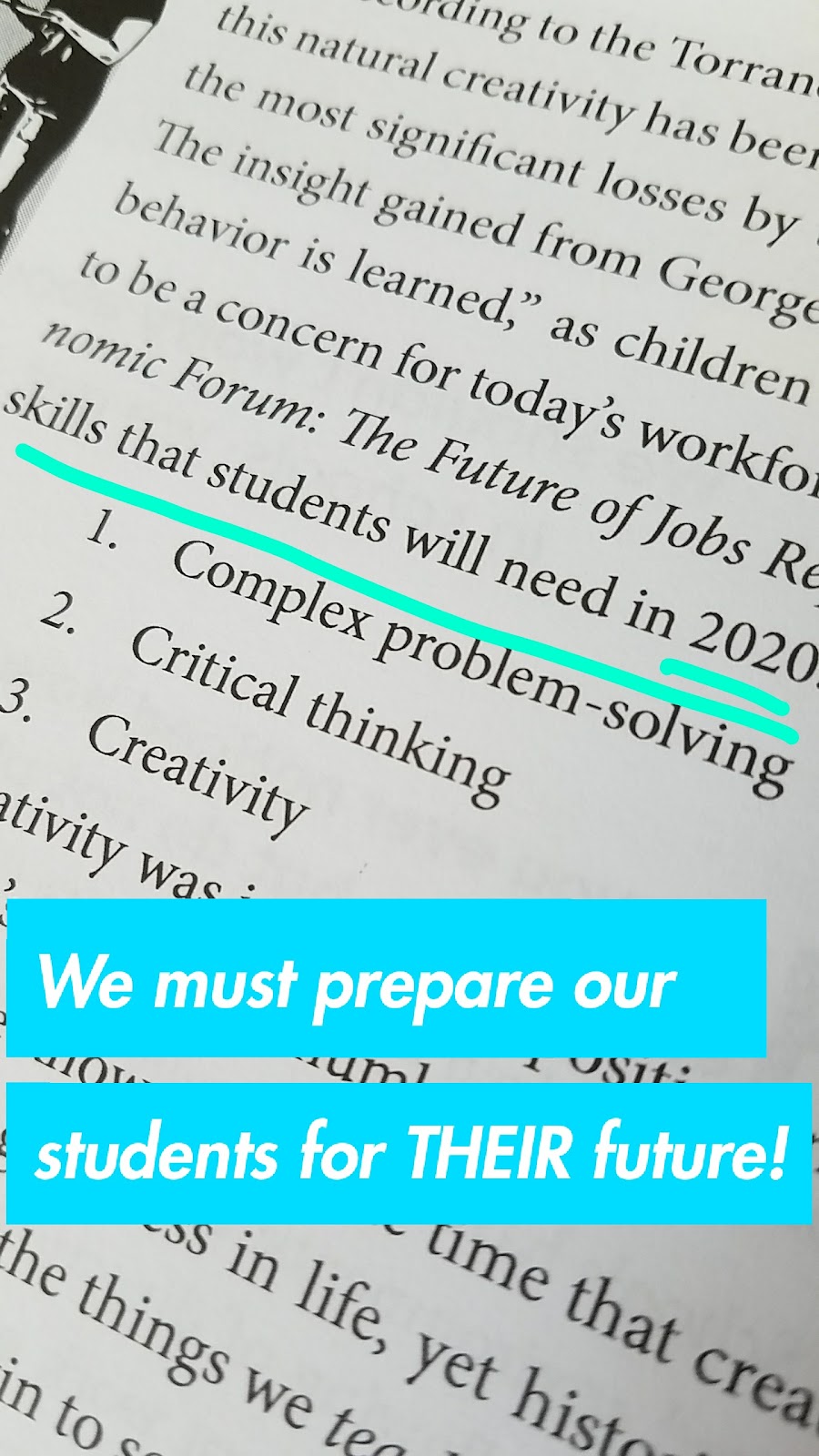
As teachers, we must do everything we can to prepare students for THEIR futures and understand what their futures will really look like.  In what profession is completing a worksheet a valuable skill? We all know that it is not - and it won’t be. Chapter 14 digs into the all important 4 C’s: Critical Thinking, Communication, Collaboration, and Creativity.  I plan to use this organizer in my lesson plans next year to challenge myself and make sure I am truly preparing my students for their future.


As I am planning for next year, I have decided my students will be publishing their learning to their own websites and this chapter solidified the idea even more. Providing my students with an authentic audience has so many more possibilities!  Jon and Marlena, of course, use this chapter to not only explain the 4C’s but to give teachers concrete examples of lessons and activities that encompass the 4C’s at different levels and for different contents. This is so valuable to me - just like my students I need to see examples!

*****
Jess:
Next year, I will be the only returning third grade teacher.  I will have two new teammates and I can not wait to share this book with them.  I want to implement basically every idea I have read so far in my curriculum.


Last post we talked about the Frayer model and when I sat down with our reading specialist I was showing her this book.  We are making vocabulary notebooks for the kids for next year using the Frayer model. I can’t wait to use the “Frayer a classmate” to introduce the students to the graphic organizer they will be using daily with their vocabulary.


/-/
The book mentions the 4 C’s multiple times; Creativity, Critical Thinking, Communication, and Collaboration.  I feel like I need to make a super cool poster to hang in my room next year with the 4 C’s on it. The 4 C’s are like my new best friends!


I will also be using the Smart Start: Things That Rock next year. Genius! This is a great way to get to know your kids the first few days and also share some laughs, while building your classroom culture and community.


As you know if you have read previous blog posts, I am a huge fan of #tlap that classroom (shout out to Dave Burgess).  The book talks about searching for party games, icebreakers, team building activities that one can use in the classroom.  Make learning fun for the kids!


I can’t put this book down and just keep highlighting, writing off to the side, starring, and writing in my notebook ideas from the book that I can’t wait to implement next year in my classroom.  Yes, I have already started thinking and planning for next school year. Don’t worry when school is over in 7.5 days (I mean who is counting?) I will take a little break. Or at least do my professional development reading by the pool.

*****
In our next post, we will share some of our favorite #EduProtocols from the book. Stay tuned… we already know they are going to be AH-MAZING!

Saturday, May 12, 2018

#EduProtocols - Chapters 1-5

For the next book we chose to study and review “The EduProtocol Field Guide: 16 Student-Centered Lesson Frames for Infinite Learning Possibilities” (@eduProtocols) by Marlena Hebern (@mhebern) and Jon Corippo (@jcorippo).  This book is beyond amazing and a book that you read and want to take everything right into your classroom immediately. We will be doing multiple posts on this book as we read through it.  Today’s post is over Chapters 1-5.

*****
Jess:
First of all, this book is AMAZING and I can’t put it down.  I have been highlighting like crazy and my mind is filled with ideas to implement next school year.  So, I appreciate the space left to take notes on the sides of each page. Of course I used #BookSnaps (shout to Tara Martin) while reading, because, well, I am obsessed now.  
This quote should be put in every educators room because it is exactly what we should be doing, “The most important things: Love kids, love what I do, and desire to be better everyday.”  As I am already looking to next year and adjujsting curriculum (because curriculum maps are due next week for next year) I have desired to make next year better than this year. I also attend as much PD, edcamps, participate in twitter chats, or conferences I can, to better myself and my teaching everyday. A good educator should do the three things listed in the quote.
This quote talks about fostering and valuing curiosity, creativity, and playfulness in children to help them be successful in their futures.  In my 3rd grade classroom, those three words are what I drive my lesson planning off of. Kids need to be curious about the world, they need to embrace their creativity and imagination, and they need to play.

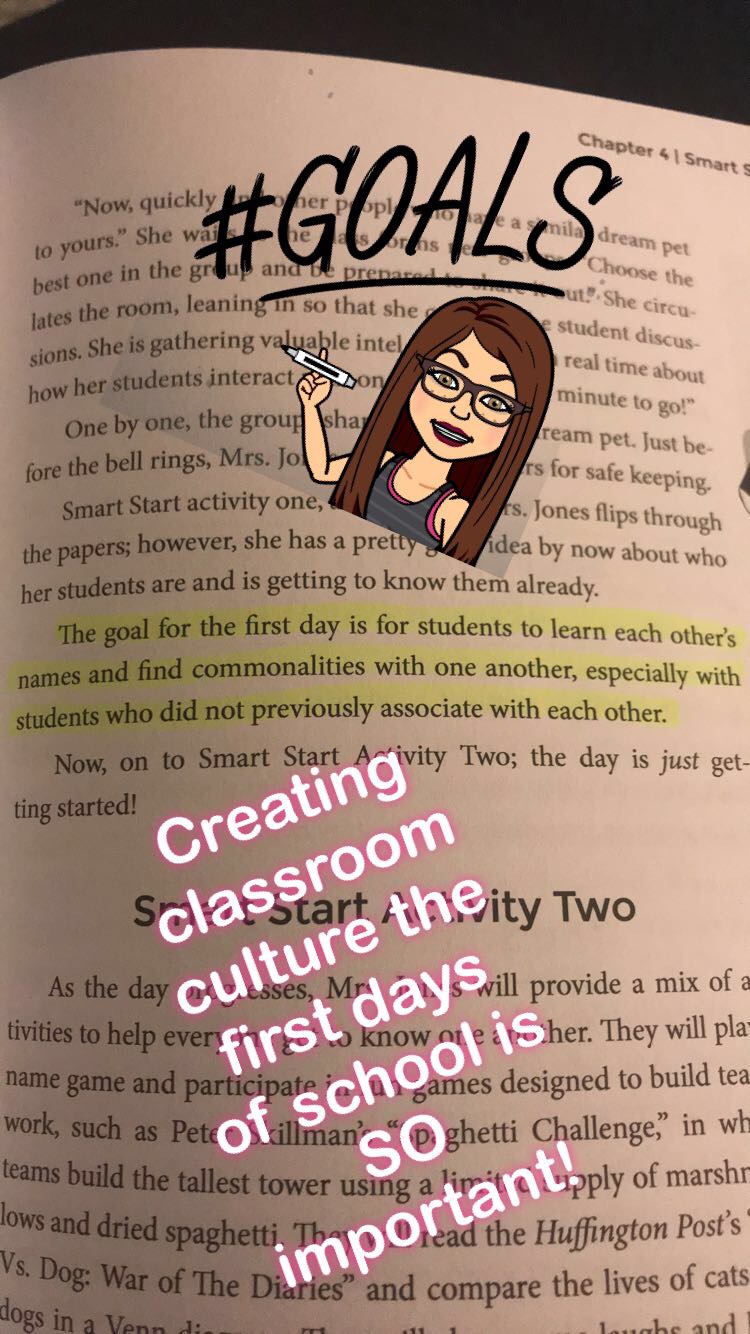
My final #BookSnap for Chapters 1-5 is about creating a classroom culture.  The book talks heavily about taking the first few weeks and building a classroom culture and how important it is.  They also give you ideas of things you can do to help build that culture. I don’t want to give too much away, yet I appreciate the ideas and will definitely be using them next year.

*****
Steph:
I am so glad we decided to pick this book up at the end of the year - it’s got me ready to plan for August!  I also know that I will be picking it up and referring to it several times while planning over my summer break because it is the kind of book educators, coaches and principals can reference over and over!  I would also highly recommend this book to pre-service and new teachers because it’s definitely got some great advice to get someone started in this field.
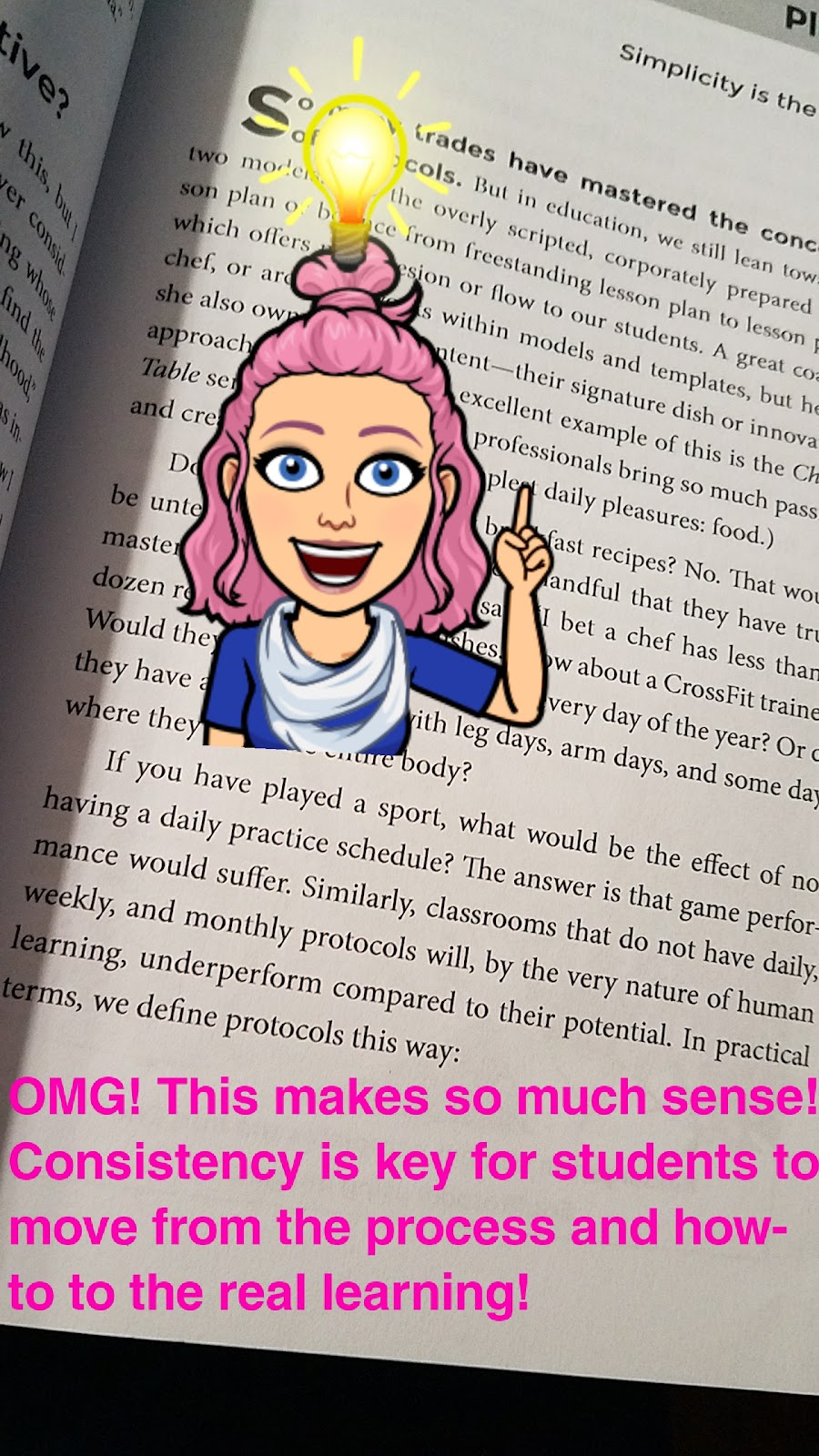
To start, the idea of ‘protocols’ is genius.  Of course we all have routines in our classroom surrounding behavior expectations, but EduProtocols are like learning activity ‘skeletons’ that can be applied to any content. Of course, in order to be a real EduProtocol, they must meet standards of engagement and consistency.
Jon and Marlena liken it to a chef or a trainer.  They don’t do brand new things every single day, the build a solid toolbox of go-tos.  These, my friends, are your EduProtocols.

Beyond the ‘teaser’ protocols introduced in the beginning of the book, the authors begin with helping teachers find ways to build strong classroom (or building) cultures! This is so important, and I 100% agree that “Culture is Everything” (chapter 3).  Beyond reminding us of this all important fact, EduProtocol gives teachers concrete strategies - Smart Starts - to accomplish this sense of community and culture in our rooms or buildings.

I am already planning to use the “Frayer a Classmate” Smart Start next school year and can’t wait to use it to create Classcraft teams in the first week!  If you haven’t already picked up the book for yourself, you’ll definitely want to check this out!

Finally, because teachers love a good acronym, I latched onto this:
and it’s definitely going to be hanging in my room next year!

With only 11 days of school left, this book has definitely made me excited for all of the possibilities August has to offer!

*****
We look forward to continuing reading this book.  Look out for a new blog post soon on some more chapters of the book.  In the meantime, give the authors a follow on twitter: @eduProtocols, @mhebern, @jcorippo.

Sunday, April 29, 2018

Celebrations of Knowledge: Gaming Edition

It is that time of the year.  State testing and end of year tests.  As a teacher, we must review the previous content with students because they may not have seen it for months.  Yet, how boring is reviewing by repetition and worksheets? Jess is preparing for state testing (the FIRST time her babies - 3rd graders) and Steph is preparing for her high school students to take the government EOC. Below is what we have done to prepare our students for the BIG tests, yet, with a twist of fun!

*****
Jess:
As state testing approached I wanted to review with the kids in a fun and calming way.  I did not want to overload them with worksheets, especially because this is the first time they are being state tested.  I did not want to worry or scare them more than they already were.

A few games I used as review were Pie in the Face (challenge edition) and Bean Boozled.  We used Quizizz and Kahoot to review Math and ELA and the top three players received points for their team (which then winning team received points in Classcraft - that will be another post).  The overall winner then was able to choose someone from another team to “battle” in either pie in your face or bean boozled. The winner of the battle then received extra points for their team.  They loved this and it put an extra fun spin on the fun. They also could challenge me for extra points, let just say I am super competitive, so I never lose. ;)

Another thing I used is the flippity add on to google sheets.  There are matching game templates, jeopardy templates, hangman, crossword puzzles and the list goes on.  The kids LOVED reviewing this way and think I am a computer programmer now. Silly them! #thanksgoogle
The last thing I did before state testing, I know this isn’t a “game” yet it was a GAME CHANGER in my room for my students mindset before testing. First, I had the students write their worries down on a piece of paper and they were the only person to see their worries.  They then went to the trash can one by one and tore their worries up and threw them in the trash.

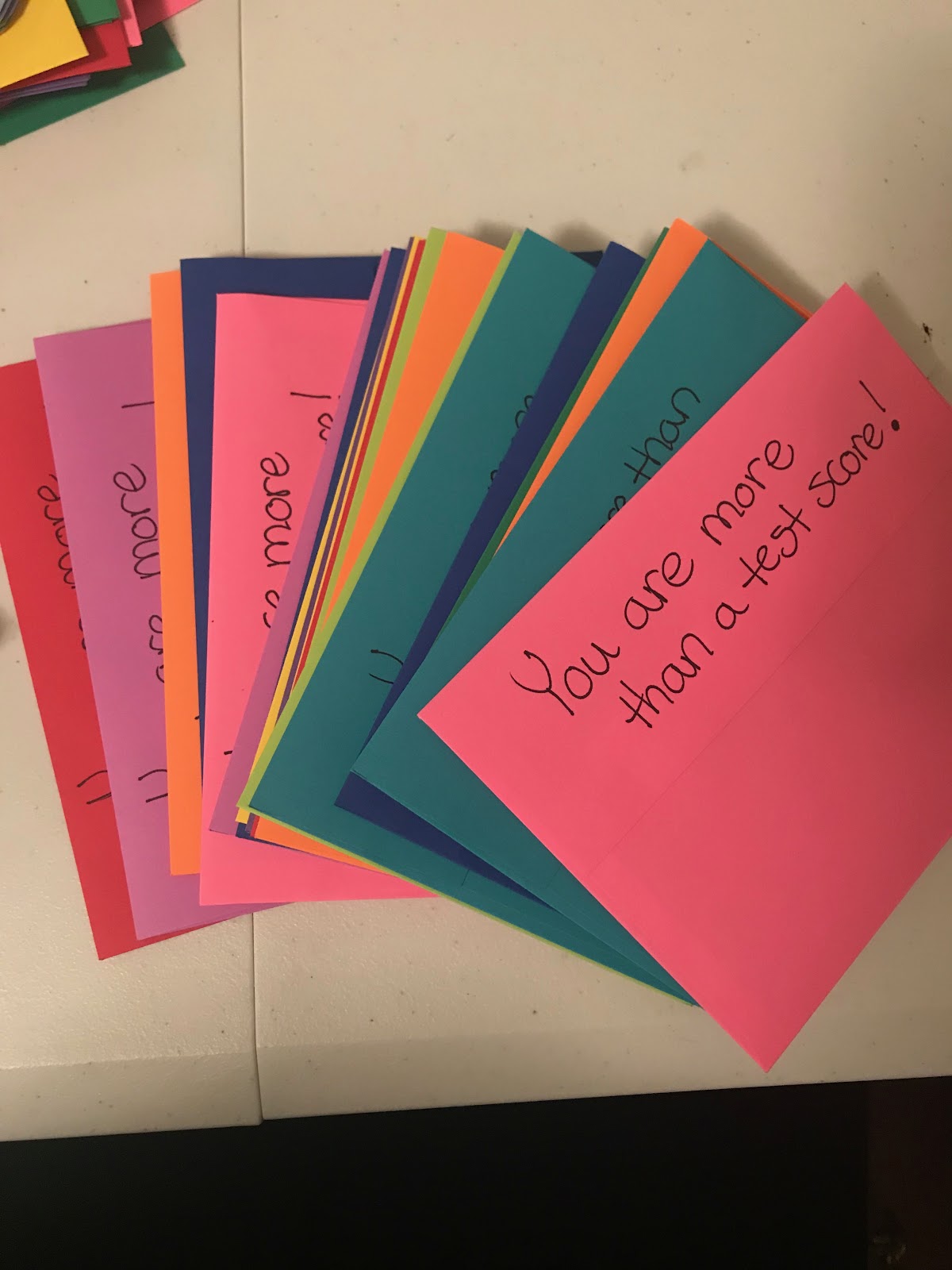
Step two was then they wrote a note to themselves for the first day of testing.  Their notes basically almost had me in tears they were so good! On the first day of testing I then laid their notes to themselves and a note I wrote to them.  This took away the fear of the BIG test. #youaremorethanatestscore

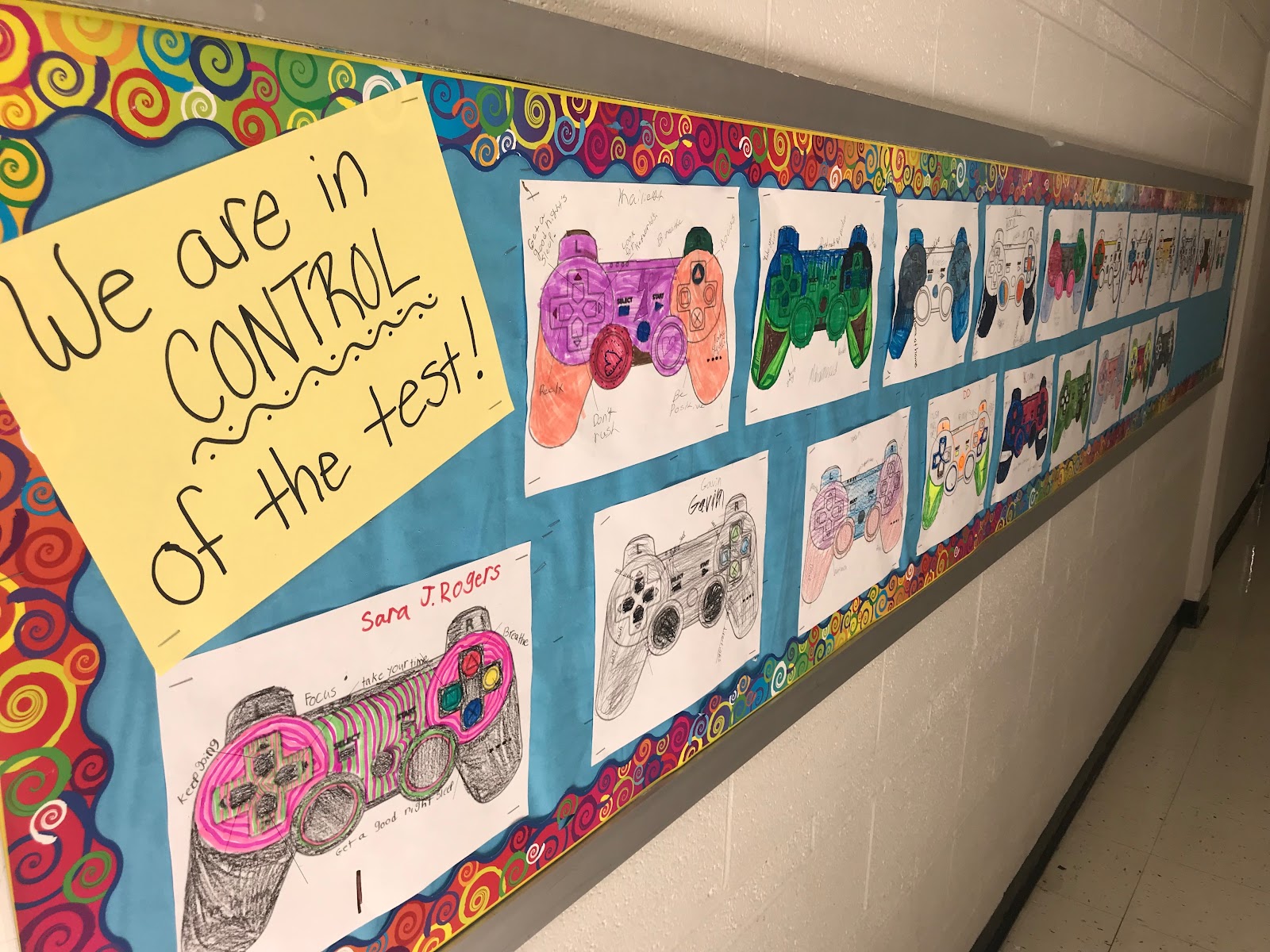
Another thing I did was print out a game controller (apparently my game controller was old school - oops).  Then the students wrote for each button of the controller a test taking strategy they were going to use on the test. This was because “We are in CONTROL of the test!”

Finally, I love me some #tlap.  I received this idea at an #edcamp recently so I had to implement it.  This box has been sitting there staring at the kids for almost two weeks.  They are so intrigued and want to know what is inside. What is inside? Hmmm…. Find out May 3rd after lunch! #goalachieved

*****
Steph:
As a social studies teacher in the state of Missouri, this is the first year I have had to deal with state testing for my students - the 11th grade government EOC (for our district). Last semester, I returned from maternity leave and felt entirely too rushed (and new to the class/content) to get real creative with lesson planning, let alone reviews!  This semester - it’s a whole new ball game!

Luckily, for me, I’ve got a colleague that is also a PIRATE and we have had some fun reviewing for the EOC with our students.  Our testing isn’t until May 7-8, so I’ll be updating this post after this week’s games, as well.

The first game we developed (and the one my students played on Thursday) was a breakout (of sorts).  In their teams, students had to complete a Google Form FULL of review questions from the whole semester!  After each set of questions, students received one clue word that would make a sentence once they were done.  After completing the google form, they had to figure out what the sentence meant to find the next clue. Some hints/activities in this breakout were content related, but not all! We felt that was a great way to even the playing field a little bit and make all team members feel valued and like contributing members.  In the end, the hidden key to the reward was behind the “Supreme Law of the Land” - a must know by the end of this course!


The other 2 major review games I will be playing are scheduled for this upcoming week - Cosmic Bowling (shout out to The Engaging Station that got our creativity going) and an EOC Carnival!  My colleague, Jessica G., played the cosmic bowling with her students last week - and I am using her pictures to show how awesome it was!  Students answered questions 1 by 1 - a correct answer gave them the chance to bowl. The number of pins they knocked down correlated to the points their team earned during that bowl.  Jessica G. (always making sure everyone is engaged) added a twist, as well! Students NOT up in the spotlight had to answer the question on whiteboards. If the original student answered incorrectly, a random student would be selected to steal the question if they were correct.  This helped make the game even more interactive and made sure that all kids were paying attention the whole game - not just during their turn!


Last, but definitely not least - the EOC Carnival! Jessica G and I were talking about doing some fun games with our students and the next thing you know we’ve got a game station rotation happening that’s turned into a carnival!  Both of our classes will be participating this next week - so, pictures will be added later! Each station (4 total) will review a different unit of study. Students will take turns being the ‘Gamemaster Jr’ and asking the questions/tallying points/etc.
Station 1 - Color Roll
Station 2 - Jenga
Station 3 - EOC Pong (an idea stolen from a student created game in the past!)
Station 4 - Pie in the Face (the credit goes to Jess for this idea)

If you are interested in the rules of each game - click here!  I am pretty excited about this and cannot wait to transform my room tomorrow!


As a side note, I am planning to play the Cosmic Bowling with my freshman classes before their semester final exams - but that won’t be for another 3 weeks!

*****
Hopefully this has given you some ideas to implement into your classroom.  If you have any other favorite ways to use review games, drop a comment below!